
A quick breakdown of our Washington state speed limits; remember, these are just guidelines—always pay attention to road signs.
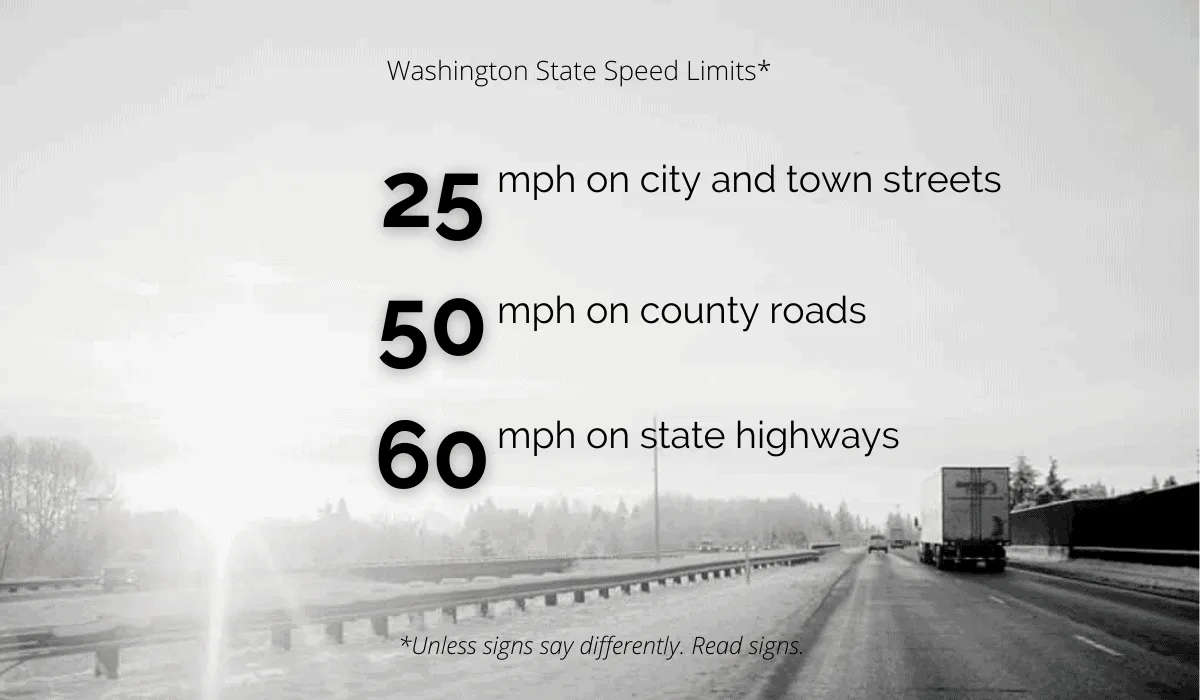
Unless there are signs stating otherwise, the default maximum speed limits are as follows.
- 60 mph on state highways;
- 50 mph on county roads;
- 25 mph on city and town streets.
“State highways” means any roadway maintained by the Washington State Department of Transportation, as opposed to federal or county-level maintenance. These highways are prefaced with SR, for State Route: SR 9, SR 20, SR 542.
“County roads” are roadways outside of cities and towns. For example, the King County Roads Department maintains 1,500 miles of roads in unincorporated King County.
There are many exceptions to the default speed limits; for example, speed limits were recently reduced on some state highways within Seattle city limits. Some of the major exceptions:
- 70 mph on many rural freeways and interstates.
- 60 mph for semi-trucks, on any highway.
- 20 mph on many residential streets.
Washington State speed limit debate
Under our state law, freeways could theoretically have speed limits set to a maximum of 75 mph, following a safety and traffic study.
Several years ago, there was a big push to raise the speed limit in Washington—and it almost happened.
The Washington State legislature passed a bill in 2015 that would increase the speed limit to 75 mph on some Washington state highways. Governor Jay Inslee vetoed the bill, pointing out that a safety study should occur before the speed limit change instead of concurrently, but he let the state proceed with a safety impact study.
When the safety study was complete in 2016, the Washington State Department of Transportation, Washington State Patrol and Washington Traffic Safety Commission announced they will not increase speed limit on I-90 in eastern Washington, due primarily to safety concerns.
“Speed is one of the major causing factors of collisions we see in this state”
Other states speed limits
Washington is not the only state that considered upping the highway speed limit in recent years. At least 10 states, including Oregon, have similar legislation come up.
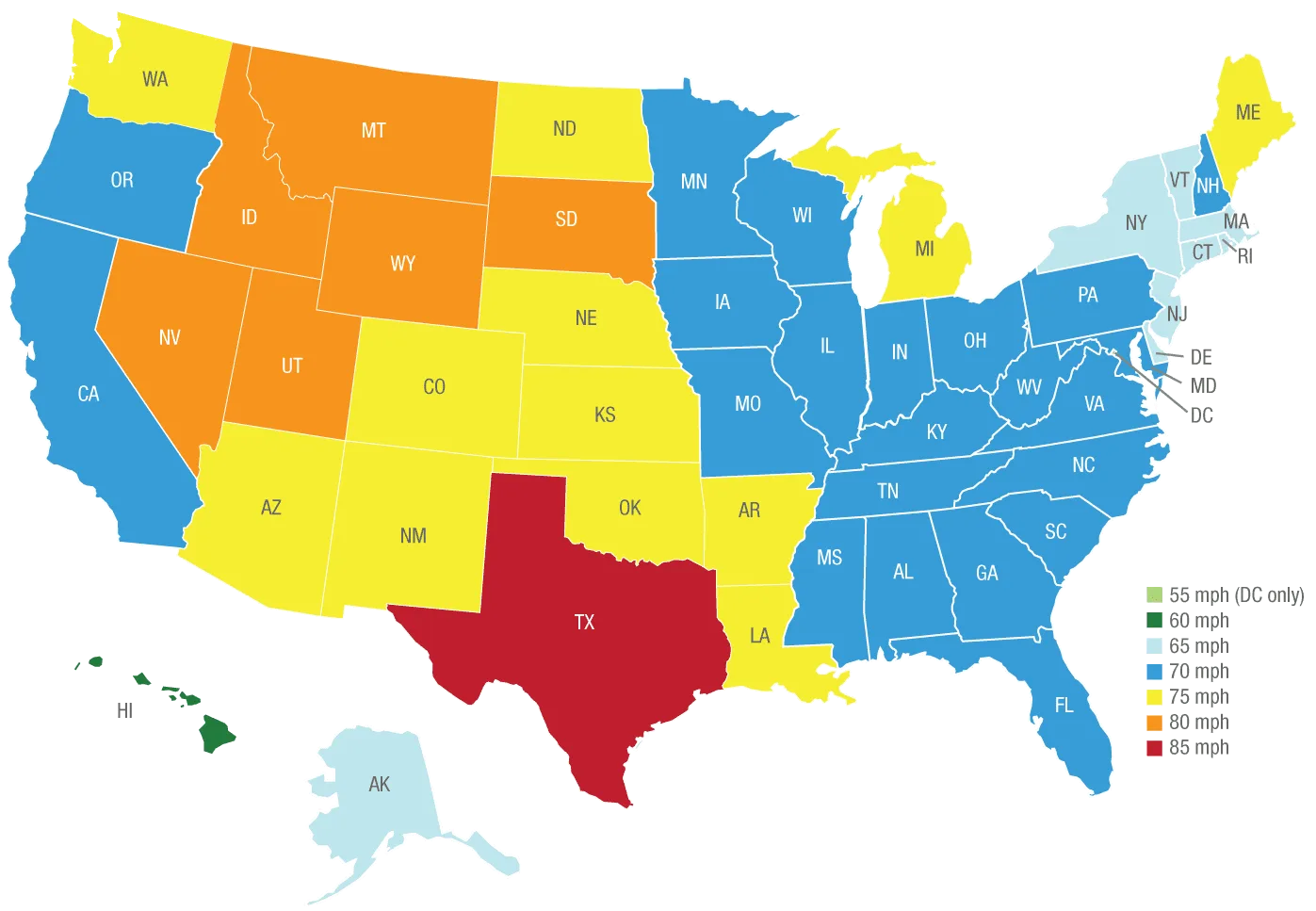
Maximum speed limits are set by the state, and have been steadily increasing since the national speed limit of 55 mph was repealed in 1995. While crash fatalities have gone down overall, the percentage of crashes resulting in death has stayed the same over time.
An IIHS study of speed limit data over a 25-year study period found that there were 36,760 more deaths—13,638 on interstate highways and freeways and 23,122 on other roads— than would have been expected if the maximum speed limits hadn’t changed.
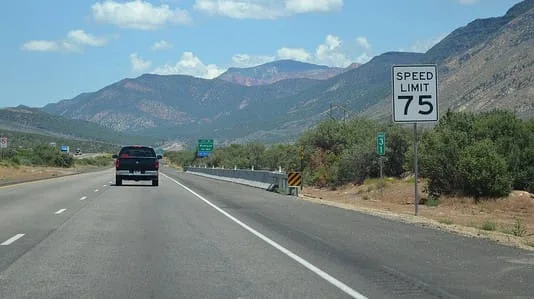
All of the progress we’ve made in reducing road fatalities—seat belt usage, reducing drunk driving, vehicle safety improvements—has been partially offset by the increase in speed-related accidents crashes.
“Crashes at these high speeds overwhelm the safety features that are built into modern vehicles.
They’re not designed to handle crashes at 75 or 80 miles an hour.”
Russ Rader, representative for IIHS
This blog was originally posted on April 27, 2015, and has been since been updated several times.
photo courtesy of countylemonade via Flikr .
